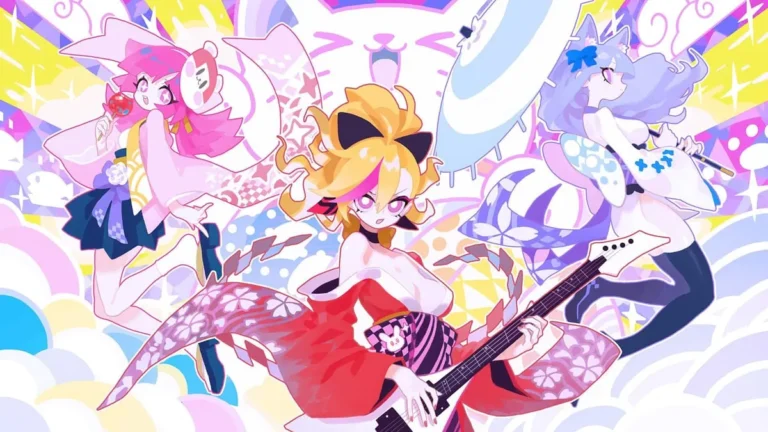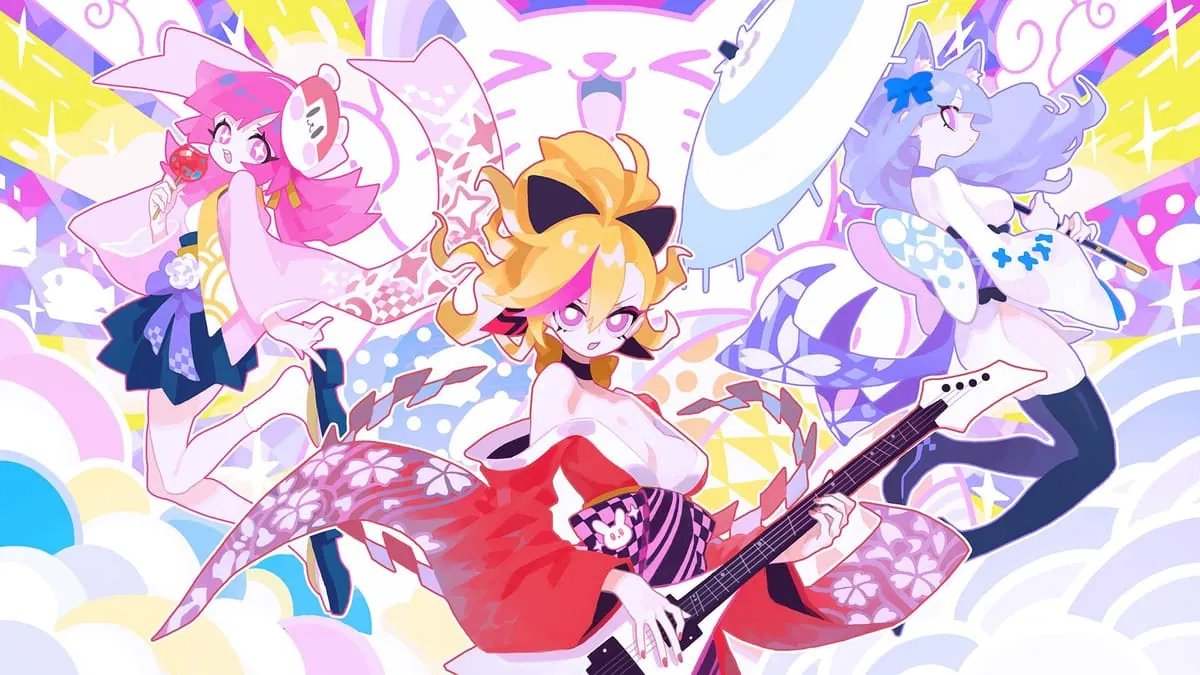
Muse Dash Screenshots
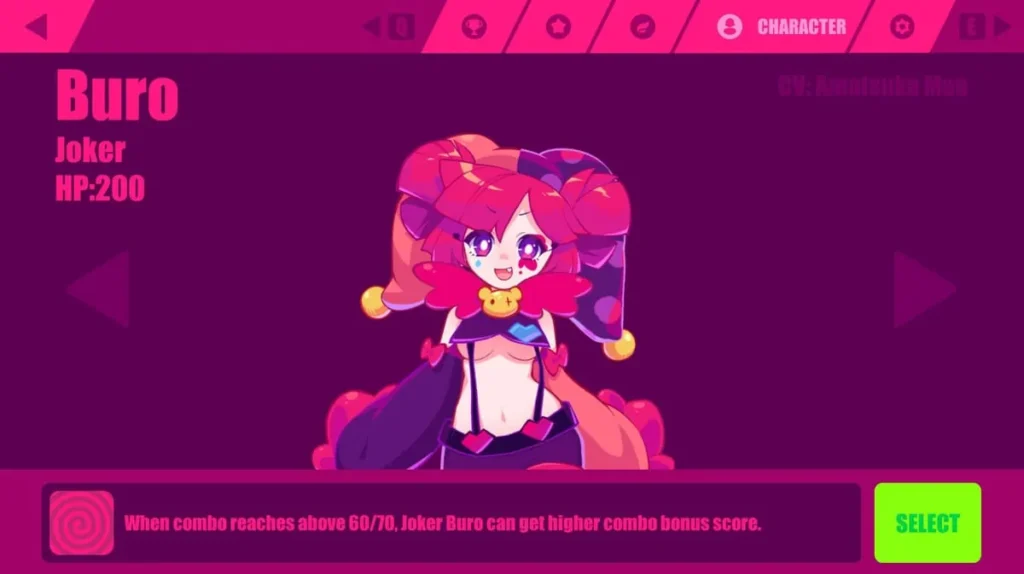
Muse Dash review
Discover the addictive beat-matching adventure with cute heroines and epic tunes
Imagine dashing through vibrant worlds, syncing your every jump and strike to thumping J-POP beats— that’s Muse Dash in a nutshell. This charming rhythm action game from PeroPeroGames hooks you with its side-scrolling battles against cute enemies, all powered by infectious anime-inspired tracks. I first stumbled upon it during a late-night Steam scroll, and hours vanished as I chased perfect combos. Whether you’re a rhythm game newbie or a beat-matching pro, Muse Dash delivers simple two-button controls that hide surprising depth. In this guide, we’ll dive into its core mechanics, characters, and tips to master the charts, helping you unlock every song and outfit.
What Makes Muse Dash Gameplay So Addictively Simple?
I remember the exact moment Muse Dash gameplay clicked for me. I’d just downloaded it, drawn in by the colorful art, and figured I’d give it a quick try. Thirty minutes later, I was still there, finger-tapping along to a hyper-pop track, a huge grin on my face. What pulled me in? The sheer, beautiful simplicity of it all. This isn’t a rhythm action game that demands you learn a complex dance of buttons. Instead, it strips the genre down to its pure, joyous core: two actions, one fantastic song, and you.
This chapter is all about breaking down that magical, pick-up-and-play feel. What is it about this game’s design that makes it so instantly accessible yet deeply satisfying? Let’s dive into the beats that make it tick.
How Do the Basic Controls and Rhythm Mechanics Work?
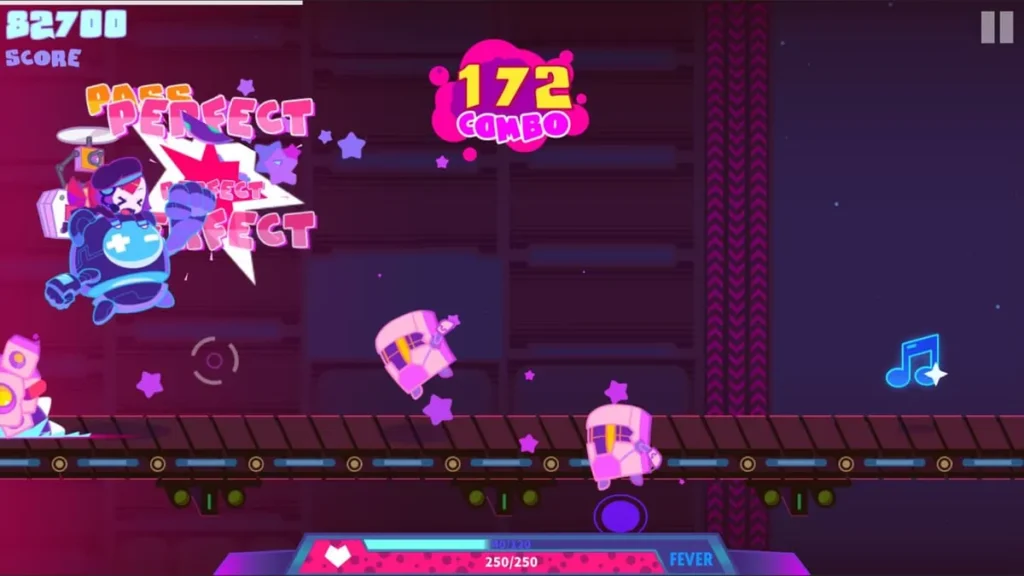
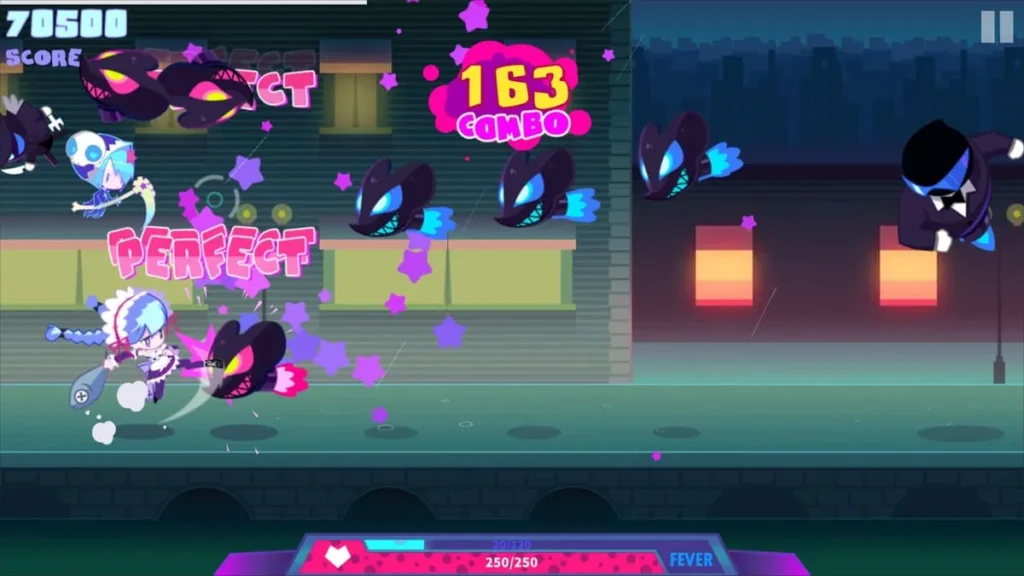
At its heart, learning how to play Muse Dash is a lesson in elegant design. You have two primary actions: attack (or tap) and jump. That’s it! 🎮 Enemies and notes flow from the right side of the screen to the left, perfectly synchronized with the music’s beat. Your adorable character automatically runs forward; your job is to clear the path.
Here’s the basic rhythm: enemies on the top lane? Hit your attack button. Enemies on the bottom lane? Press jump. Enemies smack in the middle? Hit both buttons at once. Interspersed are pink “heart” notes that heal you and spiky obstacles you must jump over. The genius of the Muse Dash controls is how this simple ruleset creates a full-body connection to the music. You’re not just pressing buttons; you’re conducting a cute, chaotic symphony of hits and jumps.
My first major “aha!” moment was realizing the game is less about memorizing sequences and more about feeling the flow. Your eyes track the incoming patterns, but your ears guide the timing. It feels less like a test and more like a dance.
Pro Tip for Beginners: Start on the easiest difficulty! It gives you space to learn the visual language of the lanes and how patterns relate to the song’s structure.
If you’re playing on a device with a touchscreen, like the Switch, the Muse Dash controls adapt perfectly:
* Tap on the left side of the screen for top-lane attacks.
* Tap on the right side for bottom-lane jumps (or use the buttons/keys).
* For middle enemies, tap both sides simultaneously. It becomes incredibly intuitive.
Why Do the Side-Scrolling Levels Feel So Fresh?
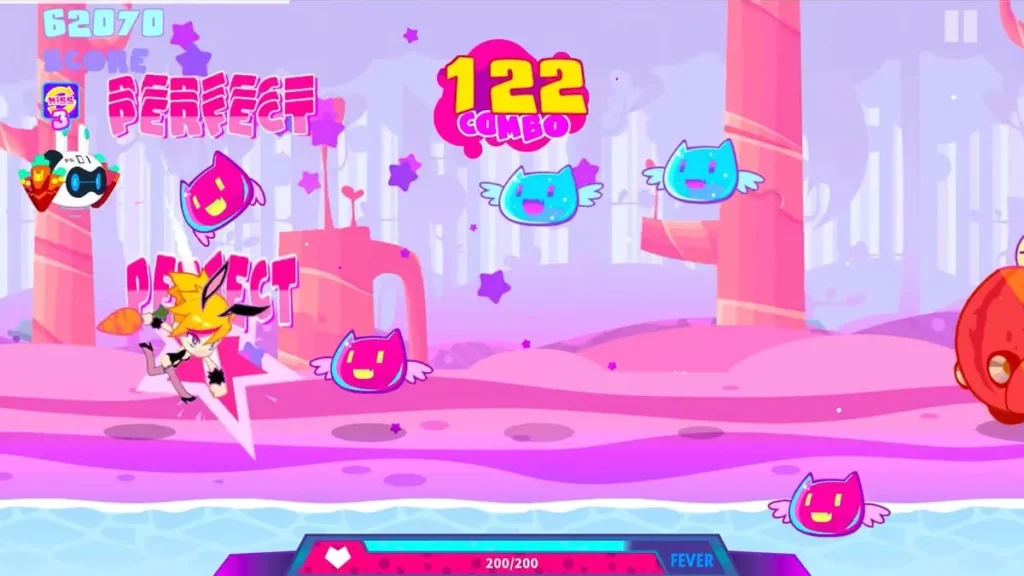
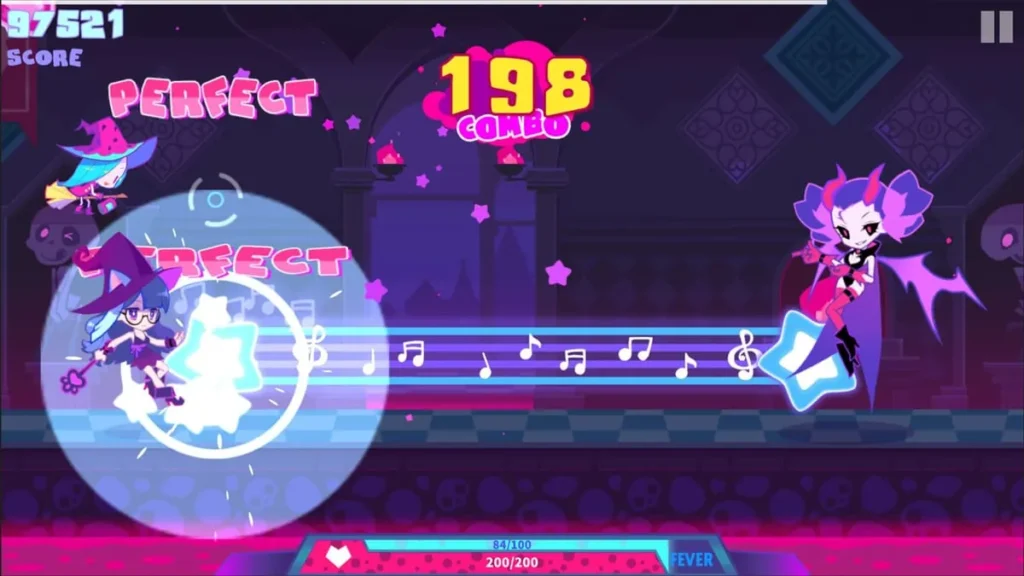
The side-scrolling rhythm game perspective is a big part of Muse Dash gameplay‘s unique charm. Unlike static note charts that fall from the top of the screen, here you’re moving through the world. Each song has its own vibrant, parallax-scrolling background filled with little details—floating islands, neon cityscapes, or dreamy forests. Your character isn’t a static icon; she’s dashing, attacking, and tumbling through these environments with playful animations.
This creates a wonderful sense of momentum and adventure. You’re not just hitting notes; you’re guiding your heroine on a literal musical journey. The obstacles and enemies feel like part of the world, not just abstract symbols. This approach makes every track feel distinct and tells a tiny visual story that syncs with the audio. It’s a feast for the eyes that perfectly complements the feast for the ears, making the entire experience more immersive and less clinical than some other rhythm games.
What Role Does the Combo and Fever System Play?
Alright, you’ve got the basics down. Now, how do you go from casually clearing a song to absolutely crushing it? That’s where mastery and the game’s brilliant risk-reward systems come in. 🏆
Building Muse Dash combos is key. Your combo counter increases with every successful hit on an enemy or note, and it’s crucial for maximizing your score. Miss a single enemy, and your combo resets to zero. This creates a thrilling tension, especially on tougher songs where maintaining a “Full Combo” becomes a white-knuckle goal.
But the real star of the show is the Fever Mode Muse Dash mechanic. On the left side of your screen, you have a health bar represented by hearts. Every time you successfully hit an enemy, you also charge a separate Fever meter. Let it fill up, and you can activate Fever Mode by pressing a special button (or via an auto-setting).
Activating Fever Mode Muse Dash does two amazing things. First, it makes your character temporarily invincible, letting you plow through obstacles without losing health. Second, and more importantly, each playable character has a unique Fever ability that massively boosts your score! One might double all points, while another adds huge bonus points for every hit.
This is where strategy meets skill. Do you activate Fever as soon as it’s ready, or do you save it for a notoriously tricky section full of saws to preserve your health and combo? I learned this the hard way on a boss track! I’d saved my Fever, then panicked during a rapid button-mashing section, activated it late, and still face-planted into a spike trap. I laughed out loud—it was my own poor planning, not the game, that failed me.
Your performance directly fuels progression. Your score and the difficulty level you choose award you XP, which levels up your profile and unlocks the game’s massive library of songs (over 50 in the base game, and hundreds more with DLC!). Here’s a quick look at how the difficulties pace your journey:
| Difficulty | Enemy & Pattern Density | XP Gain | Unlock Speed |
|---|---|---|---|
| Easy | Low. Perfect for learning patterns and relaxing. | Standard | Steady |
| Hard | Moderate. The core challenge for most players. | Increased | Fast |
| Master | Extremely High. A brutal, pattern-memory test for experts. | Highest | Rapid |
This is the secret sauce: Muse Dash gameplay is easy to pick up but hard to master. You can have a blast on Easy, feeling the rhythm. Then, as you improve, Hard mode opens up, demanding sharper reflexes. Finally, Master level turns you into a note-reading ninja, where hitting a perfect run feels like an incredible achievement. And the best part? You’re never locked out of content. You can always replay your favorite tracks, chasing a higher rank, a longer combo, or just to vibe with a song you love. That’s the addictive loop of this brilliant rhythm action game—it always welcomes you back to the beat. 🎵
Muse Dash captures the joy of rhythm gaming with its breezy controls, catchy tunes, and endless replay value—perfect for quick sessions or deep dives into master charts. From my countless runs chasing full combos to unlocking every heroine outfit, it’s become a go-to for stress-busting fun. Whether you’re syncing strikes to J-POP bangers or experimenting with Fever buffs, this little gem keeps delivering. Grab it on your platform of choice, pick your favorite muse, and start dashing today—your next high score awaits!