Parental Love
Play Parental Love
Parental Love Screenshots







Parental Love review
A player-focused look at the Parental Love visual novel, its routes, endings, and gameplay decisions
Parental Love is an adult visual novel that has attracted a loyal fanbase thanks to its branching story, intense character dynamics, and high-impact choices. If you have heard about Parental Love and are wondering what the game really offers, how its routes work, and whether it fits your tastes, this guide is for you. I will walk you through the game’s premise, its main paths and endings, and some hard-learned tips from my own playthrough so you can enjoy the story without getting lost or accidentally skipping key scenes.
What Is Parental Love Game About?
So, you’ve heard the name and you’re curious. What is Parental Love game about, exactly? 🤔 It’s more than just its genre tags. At its heart, the Parental Love visual novel is a story about rebuilding fractured connections, navigating overwhelming guilt, and the messy, complicated process of becoming a family again—if that’s even possible.
You step into the shoes of a father who, after many years away, returns home with one goal: to reconnect with his daughters. The premise is simple, but the execution is where this adult visual novel Parental Love truly shines. It’s a narrative deeply invested in the emotional tension of these relationships. The game doesn’t shy away from the awkward silences, the buried resentment, or the fragile hope that defines this kind of reunion. And yes, as an adult-rated experience, it explores these intense dynamics with explicit scenes that are woven directly into the character and relationship development.
Core Premise and Main Characters in Parental Love
The Parental Love story overview begins with a return. The protagonist is a man confronting the consequences of his long absence. His home is filled with strangers who share his blood, and his journey is defined by every careful word and decision made to bridge that gap. The core tension is universal: can you truly go home again?
The Parental Love characters are the soul of this experience. They are not just archetypes; they are individuals shaped by the protagonist’s absence, each coping in their own way.
- The Shy and Reserved Daughter: Often struggling with insecurity and a deep-seated need for validation, her path is about helping her find her voice and confidence. Your choices with her feel like gently coaxing a frightened animal—too much pressure, and she retreats.
- The Rebellious and Outspoken Daughter: Sharp-tongued and fiercely independent, she wears her anger like armor. Reconnecting with her is a battle of wills, requiring you to prove your sincerity through actions, not just apologies.
- The Independent and Conflicted Love Interest: Outside the immediate family, this character often represents a chance at a “normal” relationship, yet she is intricately tied to the family’s past and present drama. Her route adds a layer of external perspective and complex moral choice.
What surprised me most was how quickly small decisions rippled outward. 🎯
Example: On my first run, I was determined to focus on rebuilding a bond with the more reserved daughter. I thought being consistently kind and supportive was the key. In one early scene, I had the option to gently encourage her to join a family meal or to let her retreat to her room without pressure. Wanting to be “nice,” I let her go. Weeks later in the story, when a major conflict arose, she completely shut down and refused to communicate. I realized that early choice wasn’t seen as kindness, but as indifference—a reinforcement of my historical absence. It completely changed the emotional tone of her entire route.
This is the magic of the Parental Love game. It rewards you for paying acute attention to dialogue subtext and character moods. Each woman represents not just a romantic route, but a complete emotional arc about healing, understanding, and confronting the past.
To give you a clearer picture of the central cast, here’s a brief overview:
| Character | Key Personality Trait | Core Emotional Arc |
|---|---|---|
| The Protagonist (You) | Guilt-ridden, Seeking Redemption | To rebuild a family and atone for past absence |
| Daughter A | Shy, Artistically Inclined, Insecure | Gaining self-confidence and feeling seen |
| Daughter B | Rebellious, Outspoken, Protective | Learning to trust and lower defensive walls |
| Love Interest C | Independent, Compassionate, Conflicted | Navigating her own feelings amidst family drama |
How the Visual Novel Format Shapes the Experience
If you’re new to the genre, understanding the structure is key to enjoying the Parental Love VN. This is not a game of reflexes or puzzles. Think of it as an interactive storybook where your choices are the primary gameplay.
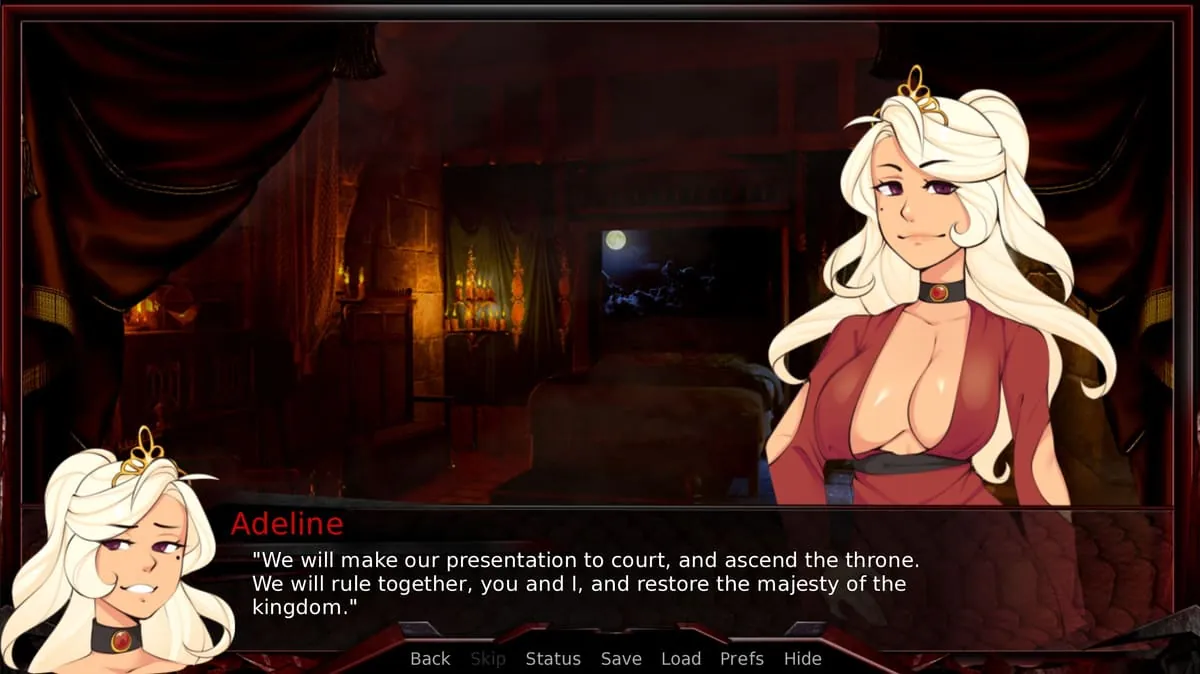
You’ll spend most of your time reading beautifully rendered scenes, with character sprites (the character artwork) that change expressions to match the conversation. The text box at the bottom delivers all the narration and dialogue. The pace is yours to control, allowing you to soak in every detail of the artwork and every nuance of the writing.
The magic happens at the decision points. 💥 Periodically, the story will pause and present you with two or more response options. These can range from seemingly innocuous daily choices (“Do you offer to help with breakfast?”) to profound emotional crossroads (“Do you confront her about the past, or let it lie?”).
- Relationship Drivers: Many choices directly increase your affinity with one character, often at the expense of another. The game constantly forces you to consider who you’re trying to connect with.
- Path Lockers: Certain critical junctures will lock you onto a specific character’s route, closing off other avenues for that playthrough. You won’t always know which choice is the lock, which makes subsequent playthroughs fascinating.
- Scene Triggers: Your cumulative choices determine which intimate, explicit scenes become available. These aren’t random; they are the culmination of a successfully nurtured relationship path and feel earned within the story.
This structure creates incredible replayability. My second playthrough of the Parental Love visual novel felt like a completely different story because I made different core choices early on, leading to new conflicts, new conversations, and a new ending.
So, what draws players to this experience? In my conversations with other fans, a few key reasons always come up:
* A Compelling, Story-First Approach: The narrative and character development are the main attractions.
* The Allure of Multiple Routes: Discovering how each character’s story unfolds differently is a powerful motivator to play again.
* Mature, Integrated Scenes: The explicit content is a draw for the target audience and is treated as part of the character arcs.
* Genuine Emotional Drama: The game isn’t afraid to make you feel uncomfortable, guilty, or deeply invested in the outcome.
Who Is Parental Love Really For? 🎯
Let’s address the big question directly: is Parental Love worth playing? The answer is a firm “yes,” but with very important caveats. This is a niche title for a specific player.
First and foremost, the Parental Love game is unabashedly for mature audiences. It deals with complex, morally ambiguous family dynamics and contains explicit adult content that is central to its storytelling. If you are uncomfortable with those themes, this is not the game for you.
It is perfect for players who:
* Prize Narrative: You play games for the story above all else. You love character development, dialogue, and seeing consequences unfold.
* Enjoy Emotional Weight: You don’t mind stories that sit with you, that make you think about the characters’ choices—and your own.
* Love Replayability: The idea of uncovering 60%, then 80%, then 100% of a story through multiple saves is exciting, not tedious.
* Appreciate Player Agency: You like knowing that your unique choices crafted your version of the story.
Conversely, you might want to steer clear if:
* You’re looking for a light-hearted, casual dating sim. The tone here is often heavy and introspective.
* You prefer gameplay-focused experiences with action, strategy, or quick-time events.
* You’re uncomfortable with the central dramatic premise or the game’s mature rating.
For the right player, the Parental Love visual novel offers a deeply engaging and memorable experience. I didn’t expect the game to push me into making difficult ethical choices so early, or to make me genuinely pause and think about what kind of father I wanted to portray in my story. That’s its strength—it uses its interactive nature to make you complicit in the drama, for better or worse.
Ultimately, what is Parental Love game about? It’s about the fragile architecture of family, the weight of past mistakes, and the difficult, often painful journey toward understanding. It packages this within a choice-driven adult visual novel framework that respects your intelligence and rewards your emotional investment. If that sounds compelling, then you have your answer to is Parental Love worth playing.
Parental Love stands out among adult visual novels because it leans so heavily into complicated family dynamics, emotional tension, and high-stakes decisions. Once you understand the premise, the central characters, and the way the branching narrative works, it becomes easier to appreciate why certain choices feel so intense.
Whether you are coming to Parental Love for its explicit scenes, its layered storytelling, or the challenge of navigating difficult relationships, taking a thoughtful, patient approach to each route will reward you with more satisfying endings. If the themes resonate with you and you enjoy replayable, text-driven games, Parental Love is worth giving a fair, uninterrupted playthrough so you can decide for yourself where each storyline should lead.